Teak and Tropical Hardwood Furniture: Comparative Guide to Natural Oils, Stability, and Aging
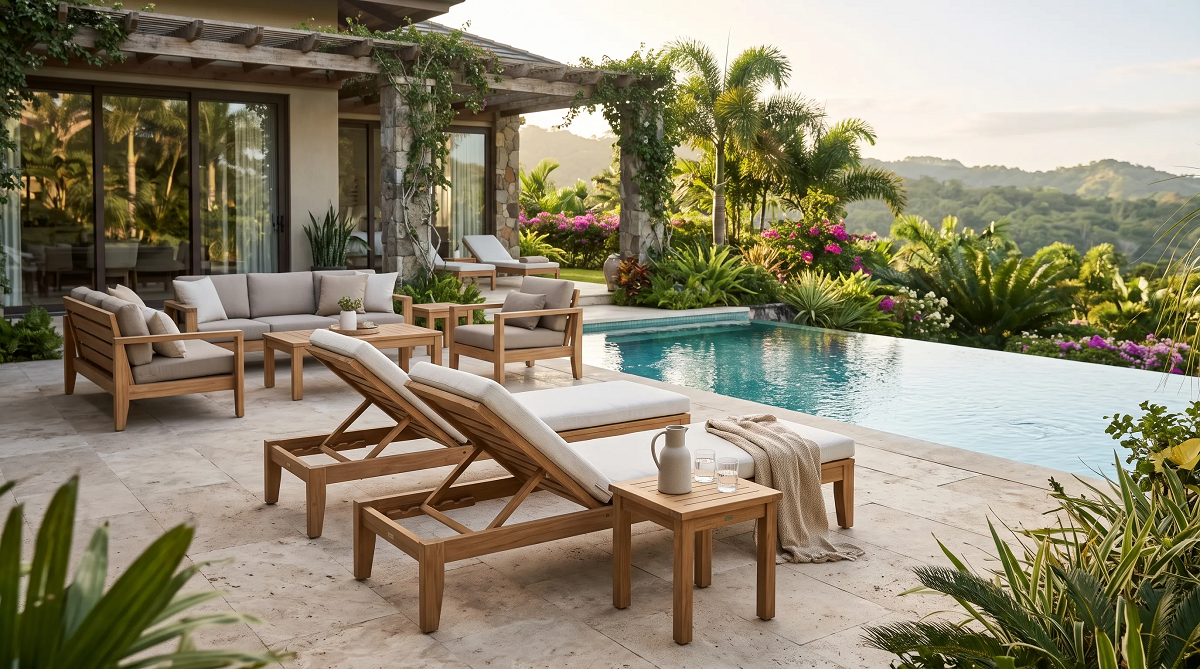
Fakultas.co.id – Selecting the right timber can define an entire architectural space. Natural grain patterns and organic oil contents vary across hardwood species. This comparative guide reveals why certain woods thrive outdoors while others excel inside.
Natural wood possesses an unmistakable tactile charm that synthetic materials cannot match. When designers plan luxury villas, modern apartments, or coastal hospitality resorts, timber selection becomes a crucial design decision. Each tropical hardwood species carries its own density, moisture tolerance, and aesthetic signature.
Understanding how raw timber behaves over decades prevents costly architectural mistakes. While some hardwoods endure torrential rains without decaying, others require sheltered indoor climates to preserve their delicate grain. Exploring these distinctions empowers buyers to match specific species with their intended living environment.
Teak (Tectona Grandis): The Sovereign of Exterior Durability

Teak wood, known botanically as Tectona grandis, holds the undisputed title of gold standard among exterior hardwoods. For centuries, maritime shipbuilders utilized teak decking because it refused to rot despite relentless saltwater exposure. That same maritime resilience translates seamlessly into outdoor furnishings.
The secret behind teak’s legendary durability lies in its high natural concentration of organic rubber and silica. Unlike other timbers that require artificial chemical pressure treatments, teak produces natural waterproofing compounds internally as the living tree matures. These natural lipids repel moisture, prevent fungal mold growth, and naturally deter subterranean termites.
Decades of commercial projects show the value of working with a reputable Indonesian furniture manufacturer like Canspira Indonesia. Their ethical sourcing ensures responsible forestry alongside uncompromising grading standards. Ethical procurement guarantees timber harvested from mature plantation stands rather than fragile old-growth natural forests.
The Anatomy of Teak Grading: Grade-A Heartwood vs Sapwood
Not all wood marketed as teak delivers identical structural performance. Commercial timber classification establishes three distinct quality grades based on the log’s internal cross-section.
· Grade-A Teak: Extracted exclusively from the deep heartwood core of mature trees over 30 years old. It features rich honey-gold coloration, dense straight grain, and maximum natural oil saturation.
· Grade-B Teak: Derived from the intermediate boundary between heartwood and outer sapwood. It displays lighter color variations, fewer natural oils, and moderate weather resistance.
Artikel Terkait

· Grade-C Teak: Consists of outer sapwood with high moisture content and virtually zero protective oils. It remains prone to surface warping and insect infestations within two years of exterior exposure.
When sourcing true Grade-A heartwood, consulting a specialized Indonesian teak furniture manufacturer makes all the difference. This expertise ensures only mature timber with dense natural oil enters production. This careful selection prevents mixed-grade inconsistencies that plague mass-market retail imports.
Silica Inclusions and Natural Weather Resistance
Beyond organic resins, mature teak absorbs microscopic silicon dioxide particles directly from volcanic mineral soils. As the tree grows, this silica deposits evenly within internal vascular cell walls. This natural mineral inclusion provides surprising mechanical hardness and abrasive resistance.
Silica makes teak fibers exceptionally tough, naturally blunting the teeth of wood-boring insects and marine parasites. In outdoor environments subjected to relentless torrential downpours, the silica and natural rubber matrix forms an impenetrable barrier. Rainwater simply beads up and runs off the surface without soaking into deep cell cores.
Artikel Terkait

This internal composition explains why untreated teak benches can remain outdoors in public parks for fifty years. While surrounding wooden structures rot away, genuine heartwood teak remains structurally sound through decades of seasonal storms.
Sungkai, Acacia, and Mahogany: Distinct Indoor Personalities
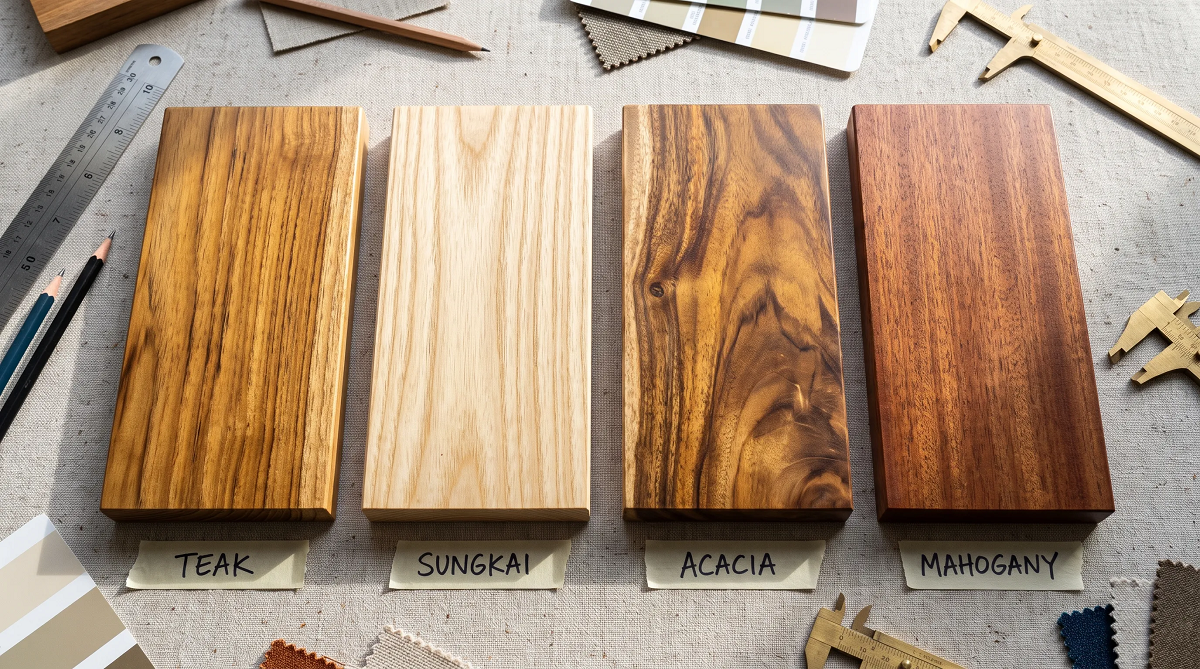
While teak excels outdoors, several companion tropical hardwoods offer breathtaking possibilities for indoor architectural styling. Sungkai wood has surged in popularity among Scandinavian and Japandi interior designers. Its pale straw color and pronounced linear grain create bright, airy, and minimalist living environments.
Acacia offers striking visual contrast through dramatic sapwood and heartwood ribbons. Its interlocking fiber structure provides remarkable density and hardness, making it ideal for high-traffic dining tables and solid cutting boards. However, acacia contains fewer natural oils than teak, requiring protective indoor finishing to prevent seasonal checking.
Mahogany represents traditional classical luxury. Its fine reddish-brown luster and smooth pore structure make it a favorite for heirloom writing desks, dressers, and architectural cabinetry. Mahogany exhibits minimal shrinkage and responds beautifully to hand-rubbed shellac and natural oil polishes.
Timber Selection Matrix: Matching Woods to Functional Spaces
Selecting the best timber requires evaluating functional placement, expected moisture exposure, and desired visual ambiance. The following comparison highlights key material performance traits:
· Teak (Tectona grandis): Ideal for outdoor gardens, swimming pool surrounds, and high-humidity spa retreats. Unmatched weather resistance and self-lubricating cellular oils.
· Sungkai (Peronema canescens): Ideal for contemporary minimalist interior living rooms, bed frames, and cafe seating. Distinct linear grain with soft golden-cream tones.
· Acacia (Acacia mangium): Ideal for durable dining tabletops, benches, and accent pieces. Distinct swirl figure and high resistance to surface abrasion.
· Mahogany (Swietenia macrophylla): Ideal for executive home offices, bookcases, and classic cabinetry. Superior dimensional stability with rich reddish-brown patina development.
How Tropical Woods Age: Golden Glow to Silver Patina
One of the most fascinating qualities of natural timber is its graceful aging process. Synthetic plastics and veneers fade, crack, and peel into unsightly rubbish over time. In contrast, authentic tropical hardwoods evolve aesthetically as seasons pass.
Left untreated in outdoor environments, Grade-A teak undergoes a natural photochemical transformation. Ultraviolet sunlight and rainwater gently oxidize the outer cellulose fibers, turning the warm golden surface into an elegant silvery-grey patina. This silver shield is purely cosmetic and does not compromise internal structural integrity.
For indoor species like sungkai and mahogany, ambient exposure deepens their intrinsic tones. Sungkai matures into a soft warm amber, while mahogany gains a deep, regal wine-red glow that interior collectors prize.
Responsible Forestry: Preserving Timber Ecosystems
Modern consumers rightly demand ethical assurance that their interior selections do not harm delicate natural forests. Certified forestry initiatives regulate timber cultivation through state-managed plantations, such as Indonesia’s Perum Perhutani.
These plantation systems enforce rigorous rotation cycles where new saplings are systematically planted for every mature tree harvested. Furthermore, mandatory timber legality verification systems (SVLK) track each log from tree stump to finished assembly, ensuring legal transparency and ecological preservation.
Conclusion: Choosing the Perfect Timber for Your Vision
Selecting the right tropical hardwood requires balancing environmental placement, physical demands, and aesthetic goals. Teak remains unrivaled for exterior terraces, pool decks, and humid maritime environments. Meanwhile, sungkai, acacia, and mahogany bring warmth, character, and tactile elegance to interior living spaces.
By understanding density, natural oil content, and responsible forestry practices, design professionals and homeowners can invest with confidence. True tropical hardwood craftsmanship delivers functional beauty that endures across generations.
Tagged with:
Acaciahardwood durabilityhardwood propertiesMahoganynatural wood oilsoutdoor wooden furnituresolid wood furnitureSungkaisustainable wood furnitureTeak furnitureteak vs hardwoodteak woodteak wood characteristicstropical hardwoodtropical hardwood furniturewood agingwood stabilitywood weather resistance
gemar berbagi info, fakta dan motivasi.
Artikel lainnya